what does it cost to run a computer all day
How much power does my PC apply?
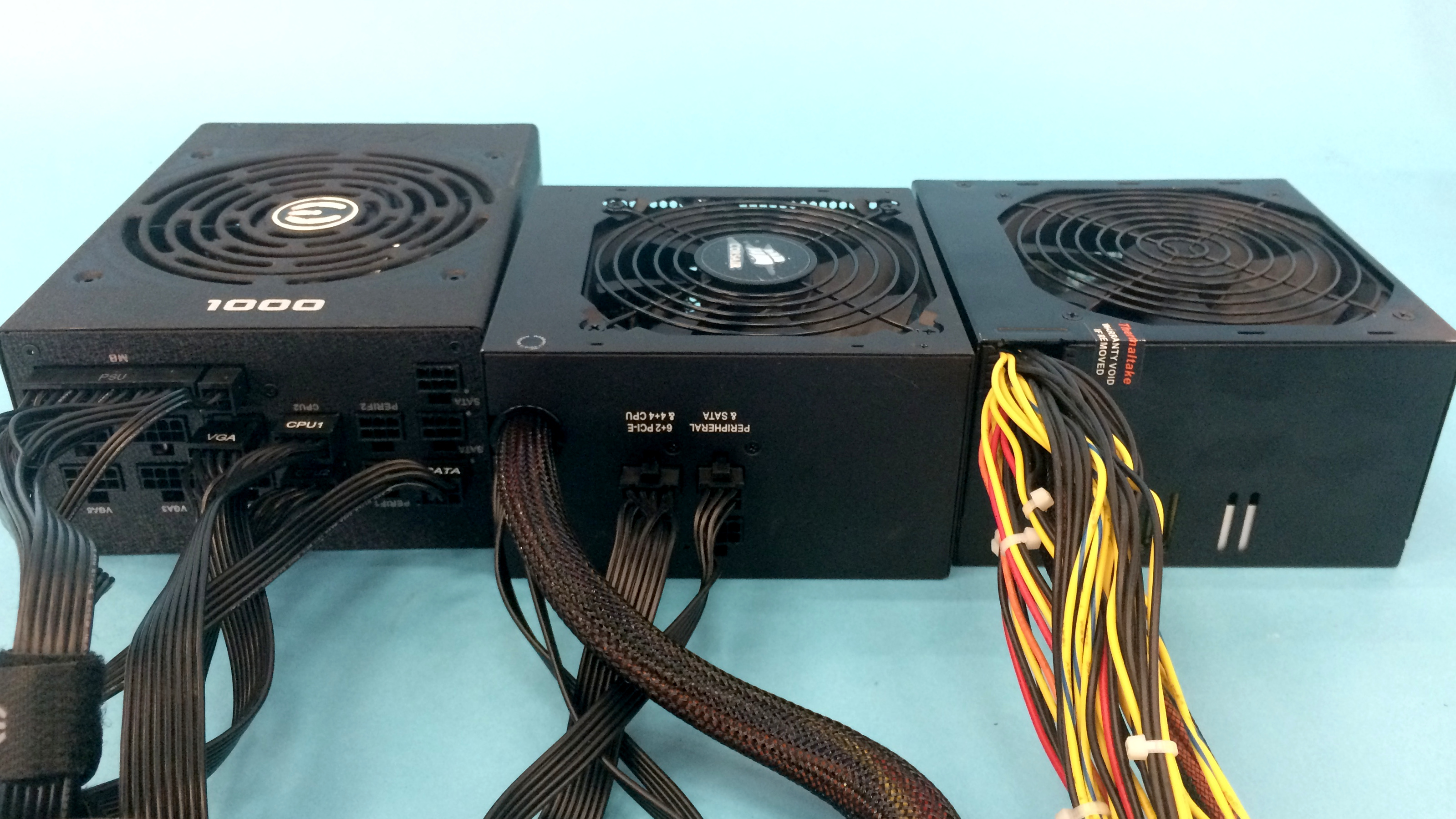
With all the expenses of putting together a top notch gaming build, few people think about the electricity cost to keep it running. Just even if you don't intendance most the toll, ability usage is an important gene to consider when choosing your components. Increased power usage drives up rut, impacts the efficiency of your cooling solution and your components, and puts more stress on your power supply. And then how much power does your PC eat?
The Complete Guide to PC Gaming
PC Gamer is going back to the basics with a series of guides, how-tos, and deep dives into PC gaming's core concepts that we're calling The Complete Guide to PC Gaming. There's much more to come, and it'south all being fabricated possible past Razer (opens in new tab), which stepped upward to support this months-long projection. Thank you, Razer!
Since every PC component consumes ability, and anybody'south build is tailored to their specific needs, any power estimate needs to exist based on your specific components. Manufacturers provide a Thermal Design Power (TDP) rating for components similar CPUs and video cards which tin be helpful for determining power usage—only it's not exactly accurate. For starters, TDP only represents the maximum rut generated by a component running real world applications, it doesn't provide an accurate representation of the components peak power. Considering manufacturer's have different definitions of what constitutes a existent world application, information technology'southward impossible to compare TDP between manufactures.
The best way to find out your PC's power usage is past measuring directly from the wall with a power meter similar the Kill-A-Watt P3 P4400. Simply plug the meter into the wall outlet, and your machine into the meter, and the P3 P4400 will provide an accurate reading of your machine's power describe. While this is great if you are trying to obtain accurate data to estimate power toll, it doesn't help you lot choose an appropriate ability supply for your build.
If you only demand a crude estimate of electrical cost, or you want to brand sure you go out enough animate room when choosing a power supply, there are several online resources that tin calculate your system's idle and load ability draw based on component specifications. When using any of these calculators, the more than information you provide, the more accurate the result will be.
It's specially of import to select a value for CPU usage. This is typically represented as a percentage of the TDP, and choosing a higher value than you expect to use can go out you with a bit more headroom and keep your system safe. To improve accuracy, well-nigh PSU calculators collect boosted data like utilization time and fourth dimension spent doing 3D intensive tasks similar gaming or rendering. Outervision's power supply reckoner allows you to specify frequencies and voltages for full organisation overclocking; this tin can exist quite useful since overclocking tin can hands bump your load describe by several hundred watts. Once y'all input all of your components and calculated the ability depict, you'll take the option to compare recommended power supplies, efficiency ratings, and view projected energy costs.
Let'south take a look at how the ability requirements compare between different levels of performance by using Outervision's power supply calculator with our recommended configurations in our PC build guides. Then we tin can manually calculate ability cost per 60 minutes at the average charge per unit in the U.s.. Since we are talking near gaming builds, all calculations will cistron in a gaming keyboard and mouse, and the resulting load draw will factor in gaming use.
Upkeep Build
- Load Wattage: 310 Due west
- Recommended Wattage: 360 W
- PSU headroom: 140 W
Mid-range Build
- Load Wattage: 388 W
- Recommended Wattage: 438 W
- PSU headroom: 262 West
High-end Build
- Load Wattage: 505 W
- Recommended Wattage: 555 Westward
- PSU headroom: 345 Due west
Farthermost Build
- Load Wattage: 812 W
- Recommended Wattage: 862 Due west
- PSU headroom: 688 W
When nosotros look at the four builds, it'due south credible that a more powerful processor and video menu adds significantly to the organization's power draw. Too, none of these calculations consider overclocking, which is why the headroom for each build is quite large. It besides doesn't calibration evenly betwixt systems. The upkeep build isn't probable to be overclocked, the 8100 isn't fifty-fifty capable, and overclocking the 7900X in the extreme build has a massive bear upon on load wattage. Having extra headroom non only keeps your system safe while overclocking, it also allows for expansion afterward; something to go along in mind if you don't want to fork out for a new PSU along with your upgrades.
But what well-nigh the cost to keep these systems running? Nosotros tin can figure that out with some simple math, so long equally you lot know the price per kilowatt hour (kWH) and the system power draw. If yous don't know your rate and don't accept admission to your electrical bill, Choose Energy is a nifty resource that allows you to view electricity rates all across the US. You can also compare rates between States and view the average cost in the United states of america, which is what we volition use for our comparing.
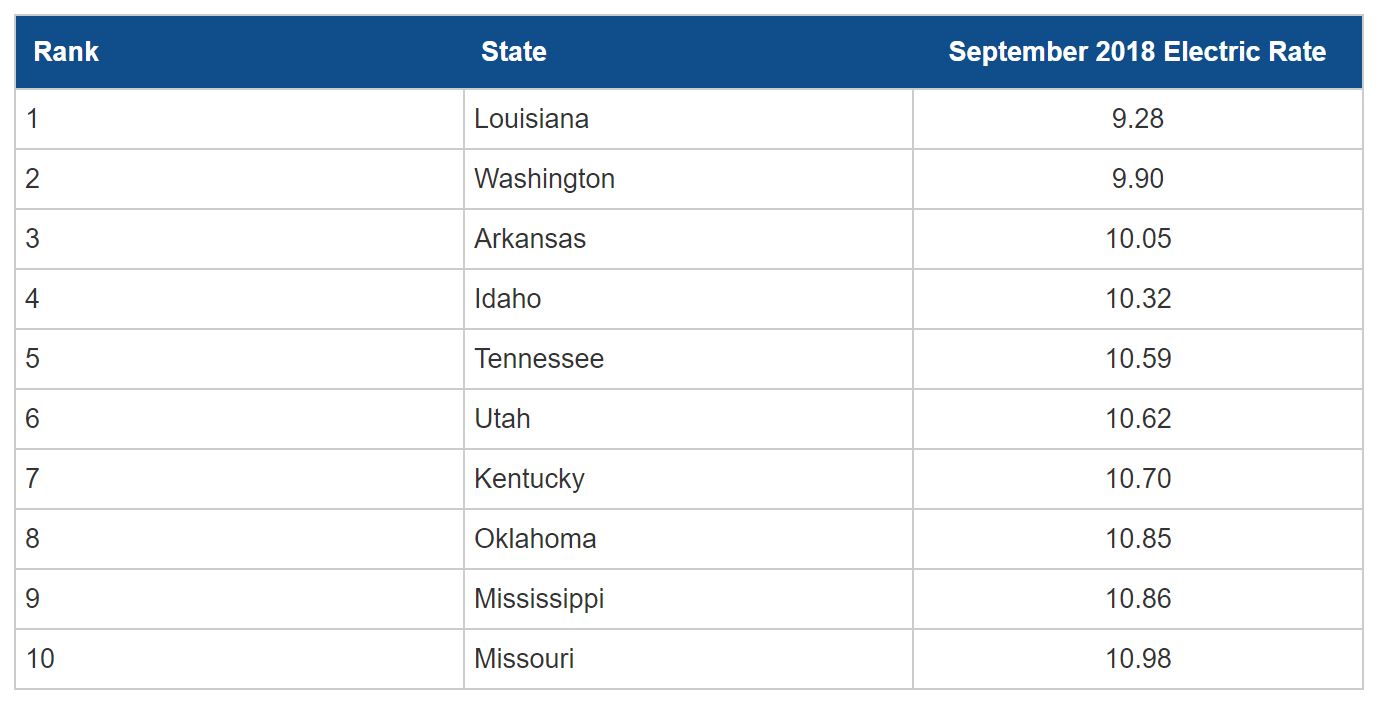
The boilerplate electricity price in the United states is 13 cents per kWh; this means that information technology costs thirteen cents to run something that consumes 1000 watts for one hour. To calculate the toll of running your PC at total load for one 60 minutes, you need to divide the watt usage by 1000 and multiply the upshot by your kWh. If your PC uses 300 watts while gaming, then ane hour of play time would cost yous merely under 4 cents.
At present we tin compare the toll to run each of the four builds.
Budget Build: iv.03 cents/hr
Mid-range Build: 5.04 cents/hr
High-end Build: half dozen.56 cents/hour
Extreme Build: 10.56 cents/hour
When looking at the hourly rate, even the biggest difference in cost doesn't seem like much. Simply, if nosotros extrapolate that over a year at 2 hours a 24-hour interval, it can start to add together up. The budget build would price y'all 29 dollars a year to run, while the extreme build would run you 77 dollars a year, nearly double the toll. If you factor in overclocking, you'll be looking at an even more significant divergence in cost.
Source: https://www.pcgamer.com/how-much-power-does-my-pc-use/
0 Response to "what does it cost to run a computer all day"
Post a Comment